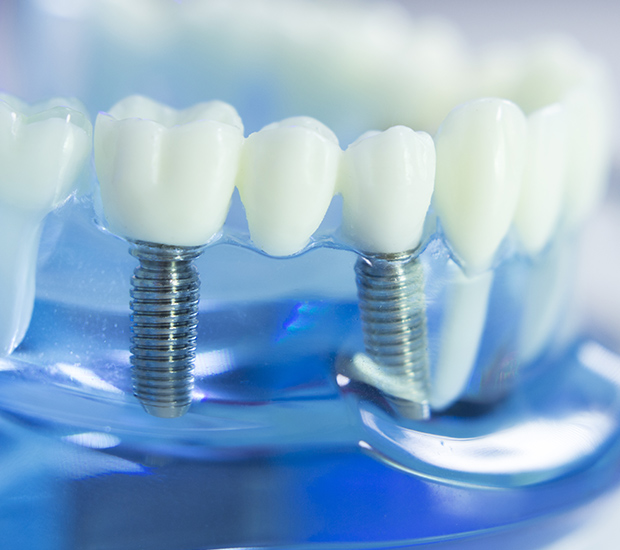
Dental Implants Simi Valley, CA
The loss of a tooth transforms more than people anticipate. Eating feels different. Talking feels off. And smiling? The majority of individuals take it a little more cautiously. At Alamo Family Dentistry, we provide Dental Implants in Simi Valley, CA, to patients who desire a lasting solution that will feel natural.
Many people imagine it is not a big problem when a tooth is lost, and leave a space between the teeth. However, that open space is a problem in the long run. The underlying bone begins to shrink. Nearby teeth slowly shift. The gums get irritated or infected. All that may cause even greater dental problems in the future.
A tooth implant in Simi Valley is not just a replacement of the visible tooth but also the root. That is what makes implants different. They sustain the jawbone, assist in maintaining the position of the other teeth, and help regain normal teeth chewing.
The dental implants are also known to support the facial structure, which tends to alter in the absence of teeth over an extended period of time. After being topped by a custom-made crown, the implant would fit in perfectly with your smile. No man can tell that it is not a real tooth.
If you’re looking for a stable, long-term option to replace missing teeth, Dental Implants in Simi Valley may be the right choice.
Facts from the American Academy of Implant Dentistry (aaid.com)
- More than 30 million Americans are missing all their teeth in one or both jaws
- 15 million people in the U.S. have crown and bridge replacements for missing teeth
- 3 million have implants and that number is growing by 500,000 a year
- 10% of all U.S. dentists place implants but that is increasing
- The success rate of implants has been reported in scientific literature as 98%
- Implants performed by U.S. dentists 5,505,720 (2006)
- Implants performed by U.S. general dentists 3,103,930 (2006)
- The dental implant market in the U.S. is projected to reach $5 billion by 2018
Questions to Ask When Selecting an Implant Dentist
- What treatment options do you use to restore missing teeth?
- How many implant procedures have you performed?
- What’s your success rate?
- What’s your education and training in implant treatment?
- Which technique* and type of replacement teeth or appliance do you recommend for me, and why?
- What steps are involved in the process and where and by whom are they performed?
- What should I expect throughout the process in terms of pain, recovery time, eating, etc.?
- Will I have teeth throughout the process?
- What type of anesthesia do you use?
- What are the risks of the treatment option you’re recommending?
- What are the benefits?
- Can you share before-and-after pictures of other patients you have treated?
The Process of Installing Implants
When one or more teeth are missing, Dental Implants in Simi Valley, CA may be an option. The first step is a consultation. Call (805) 520-1711 to schedule a visit at our Simi Valley office. We’ll evaluate your teeth, gums, and jawbone to determine if implants are appropriate.
Healthy gums and sufficient bone are important before placing an implant. If we find cavities, gum disease, or infection, those issues need to be treated first. Skipping that step increases the risk of failure, and we don’t do shortcuts here.
Once you’re ready, the team at Alamo Family Dentistry will take impressions to design your replacement tooth. The crown is created in a dental lab and matched carefully to your surrounding teeth's shape, size, and color. The goal is for it to look like it’s always been there.
Most patients are surprised by how natural the final result looks. Once placed, it’s difficult to tell which tooth is the implant.
Implant-supported teeth won’t develop cavities, but they still need daily care. Brushing, flossing, and routine dental visits are essential to keep the gums and nearby teeth healthy.
Simi Valley Dental Implants
A major part of the implant process involves placing a small titanium post beneath the gum line. This post acts as the replacement root and is what separates implants from other cosmetic dental options. The post is placed into the jawbone, where it gradually fuses with the surrounding bone. This bonding process takes a few months and creates a stable foundation that closely mimics natural tooth roots. Unlike natural roots, however, the implant material cannot decay.
After healing, the usual crown is put on the implant. By that time, patients can comfortably eat, speak well, and carry out daily activities without the fear of the tooth moving around or becoming loose.
We are offering Dental Implants in Simi Valley at Alamo Family Dentistry with the energy of comfort, functionality, and success in the long run. Each step is being planned in such a way that the end result is solid and reliable.
Check out what others are saying about our implant services on Yelp: Dental Implants Simi Valley
Caring for Dental Implants
Dental implants are not fragile, but low-maintenance. Patients usually enquire how the implants can fall out or loosen. When installed in the right position and maintained well, they remain in their position.
Implants are attached to the jawbone, making it possible to work normally. Once healed, there is no problem with sports, exercise, and everyday life.
Implants are not too difficult to care for. Just brush and floss like on natural teeth. It is recommended that dental cleanings and examinations with Dr. Aminov be done on a regular basis in order to check the health of the bone and the gums.
Though the implants are not infected, the bone supporting them can get infected with gum disease. In case the infection is introduced into the jawbone, the implants and the natural teeth are at risk. Early treatment is key.
In case of pain, swelling, and discomfort in an area around an implant, please call our office at 805-520-1711. We also consider the emergency cases on dental implants, which may be urgent to avoid other complications.
Properly taken care of, dental implants are very successful in the long run. The success rates are approximately 98 percent in studies that have been conducted over a period of more than 40 years.
Consultation
To find out whether implants are right for you, call (805) 520-1711to schedule a consultation at Alamo Family Dentistry. Our team takes the time to explain your options clearly and answer questions honestly.
Every treatment recommendation is based on your individual needs, not a one-size-fits-all approach. If you’re missing teeth and want a reliable solution, dental implants can restore both function and confidence.
A strong, natural-looking smile is achievable with the right care and planning. Fun fact early versions of dental implants date back to around 600 AD. Thankfully, modern dentistry has come a long way since then.
Ancient dental implants have been traced back to around 600 AD, when tooth-like
pieces of shell were hammered into the jaw of a Mayan woman. Thank goodness for
contemporary dentistry!
Read more
Implant FAQ
Q. I’m missing two teeth next to each other. Can I place one implant and attach it to a natural tooth to make a bridge?
A. This is not advisable in the majority of cases. Improved dental implants and natural teeth act in varying ways. Implants are stiff and fixed into the bone, whereas natural teeth contain ligaments and slight movement. When you relate the two, that difference in motion has the potential of stressing the implant or the natural tooth in the long run. We have witnessed the results of this, which causes loosening, fractures, or bone loss surrounding the implant. The most common way out is in a better long-term solution, that is, a better solution to the problem, which is to fix the two implants in close proximity to each other and to connect them. Although it might be more expensive in the short run, it tends to be more stable, comfortable, and longer lasting. It can save subsequent complications and further treatment in the long run.
Q. I lost my upper back teeth years ago, and my sinuses feel worse on that side. Could the missing teeth be causing this?
A. This is indeed not unusual. In the case of long-term absenteeism of upper back teeth, the maxillary sinus over them may be slowly displaced downward into the cavity left behind. This is the case since the jawbone is no longer stimulated by tooth roots. In cases where patients eventually desire Dental Implants in Simi Valley, they may not have sufficient bone to carry out the case safely. Sinu lift or sinu elevation procedure could also be advised in such cases. This is done by inserting a supportive material, such as bone or bone graft, in the region. Although it may sound dangerous, it is a proven process that enables the safe and successful placement of the implants.
Q. I’ve worn dentures for years, and they constantly move. I rely on adhesives and can’t eat properly. Is there still hope?
A. Yes. A significant portion of denture wearers feel trapped, but the current types of implants are providing remedies even after a long time of bone loss. One of the most frequent complaints that we hear is loose lower dentures. They swim, scratch, hurt tender parts, and make dining painful. Stability can, in most situations, be enhanced dramatically with the insertion of a few implants. Implant-supported dentures may be clipped or cemented to the place of your requirement. Patients usually report an instant increase in discomfort, level of chewing, and confidence.
Q. I’m missing all my teeth and wear full upper and lower dentures. Do I need an implant for every tooth?
A. No, you don’t. This does not entail replacing all the teeth with individual implants. The quantity of implants required is determined by the kind of restoration to be carried out. Other full-arch designs are supported with as few as four or six implants. When you are consulting, we are also examining your bone structure, bite, and general oral health to decide the best method. Numerous situations may be treated with the minimization of implants in order not to overcomplicate the treatment, yet implants are still able to help tremendously, be functional, and comfortable.
Q. A dentist told me years ago that I didn’t have enough bone for implants. Are there alternatives now?
A. Dentistry has evolved during the last decade. Those who had been informed years ago that there were no implants, maybe a second opinion is worth having. Nowadays, we have great imaging, bone grafting procedures, and other types of implants which enable treatment in situations that used to be deemed too dangerous. It is not so common that a person has no choice at all. Even patients with severe bone loss may be suitable after a proper assessment for some sort of implant-supported solution.
Q. I had a root canal, and the tooth later fractured. Can it be replaced with an implant instead of a bridge?
A. Often, yes. Root canals cause teeth to become brittle as time goes by and are easily fractured. A bridge was the most popular solution in the past, and it involved the grinding of the other healthy teeth. When using dental implants, it is often possible to replace only the damaged tooth and leave the rest intact. This saves a greater amount of your own natural tooth structure and, in most cases, results in a more solid solution that will last longer. The bone and the gums will be examined during your exam to establish whether they are appropriate for taking an implant.
Questions Answered on This Page
Q. How many people wear dental implants?
Q. What is the process for dental implants?
Q. How do I take care of my dental implants?
People Also Ask
Q. Can dental implants replace my missing teeth?
Q. Will I be able to eat my favorite foods after receiving dental implants?
Q. Are dental implants better than dentures or dental bridges?
Definition of Dental Implant Terminology
- Abutment
- The connector that attaches the crown to the implant.
- Bridge
- A set of replacement teeth supported by implants or natural teeth.
- Dental Crown
- The visible portion of the implant looks and functions like a natural tooth.
- Dental Implant
- An artificial tooth root is placed into the jawbone to support a replacement tooth.
- Endosteal (endosseous)
- An implant is placed directly into the jawbone.
- Eposteal (subperiosteal)
- An implant that sits on top of the jawbone beneath the gums.
- Implant-Supported Bridge
- A bridge secured using dental implants for added stability.
- Osseointegration
- The process where the implant bonds with the surrounding bone.
- Periodontal
- Literally “around the tooth”
- Resorption
- Bone loss that occurs after tooth loss.
- Transosteal (transosseous)
- An implant that passes through the jawbone for additional support.
Back to top of Dental Implants
Recent Posts

Benefits of Visiting a Cosmetic Dentist in Simi Valley
Most people think going to the dentist is just about cavities or cleaning. That is part of it, sure. But there is a whole other side to dental care that has more to do with…

Cosmetic Dentistry from a Family Dentist
It is essential to visit a family dentist every six months to maintain proper oral health. While it is possible to keep the teeth and gums suitably clean with appropriate brushing and flossing techniques, excellent…

Frequently Asked Questions: Dental Sleep Medicine
Dental sleep medicine can help with snoring and obstructive sleep apnea, which are two common sleep problems. Snoring is one of the primary symptoms of obstructive sleep apnea, but not everyone who snores has it.…
Who a General Dentist Serves
Regular visits to a general dentist are an essential component of good health and overall wellness. It is important for both adults and children to have their teeth cleaned and examined by a dental professional…
Explore additional topics covered on our website:
- Tooth Removal and Dentures Procedures
- 4 Reasons to Choose Invisalign for Teeth Straightening
- Critical Decisions About the Full Mouth Reconstruction Process
- When to See a Dentist for Denture Repair
- What a Restorative Dentist Can Do for Your Smile
- Are Gum Disease and Gingivitis the Same Thing?
- 4 Reasons Why You Should Visit a Cosmetic Dentist
- How to Recover From a Wisdom Tooth Extraction
- What a General Dentist Does For Sleep Apnea Treatment
- What Are the Advantages of Getting Dental Implants